
Bicycle and pedestrian laws
Riding a bike, walking or using a wheelchair on your neighborhood sidewalks can be a safe and convenient way to get around, but only if everyone follows the laws. Whether you are on the sidewalk or driving near a bicyclist or pedestrian, always be aware of your surroundings and keep the state laws in mind.
Bicycle laws
If you’re riding a bicycle, you must:
- Obey all traffic control signs and signals, just as you would when driving.
- The only exception is that bicyclists may treat stop signs as yield signs when the intersection is clear.
- Use signals, if able, to let people behind you know when you're turning.
- Use good judgement. Remember that you are sharing the road, and it is important to be predictable to avoid a crash.
- Use a headlight and rear reflectors when it's dark.
If you are driving near a bicyclist:
- Stay three feet away when passing.
Read more about Minnesota’s bicycle laws.
E-bike laws
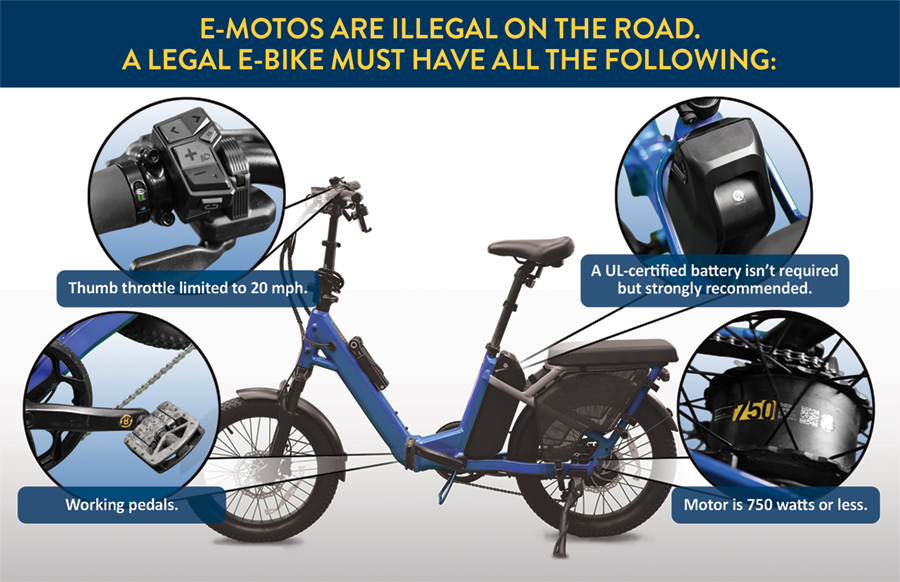
Under Minnesota law, a legal electric-assisted bicycle must meet all of the following requirements:
- The motor must not exceed 750 watts of power.
- The maximum assisted speed must not exceed 28 miles per hour.
- The bicycle must have fully functional pedals that can be used to propel the bike.
Any vehicle that does not meet these requirements is not considered an e-bike under Minnesota law. Any modification that increases speed or increased the motor output may be unlawful.
Age restrictions also apply. Even legal e-bikes may not be operated by anyone under the age of 15.
Read the full statute for more information.
Traffic safety partners, visit the order site to order print copies of the e-bike laws card.
Pedestrian laws
- If you are driving, you must stop for pedestrians crossing the street. Treat every corner and intersection as a crosswalk, whether it’s marked or unmarked, and let pedestrians cross.
- If you are a pedestrian, you must obey traffic control devices, such as traffic lights, signs and barricades.
Read more about Minnesota’s pedestrian laws.